
Network operations teams have heard plenty about AI this year. Most of it answers the alert in front of it, then hands the rest of the incident back to an engineer. Someone still has to correlate the evidence, find the cause, prepare the fix, and prove it held.
This week, we announced Selector Foundry, the agentic NetOps solution built into the Selector platform. Foundry adds a team of specialized AI agents on top of the full-stack observability and AIOps foundation our customers already run. The agents correlate evidence, identify the root cause, act within guardrails your administrators define, and validate recovery. They do all of it from one correlated model of your entire infrastructure path.
The goal is simple: put your best network engineer on every shift.
Foundry ships with six generally available agents. Rosetta is the conversational interface that orchestrates them. Five specialists handle correlation, ticketing, notifications, dashboards, and building new agents. Teams can also author their own agents, version them in Git, test them against past incidents, and run them on their own data.
The foundation underneath the agents
An AI agent is only as reliable as the data it reasons over. If you point a language model at raw telemetry and ask what happened, you get a guess, because network data is high-volume, spread across vendors, and full of symptoms that look like causes.
Selector Foundry agents start from context the platform has already finished. Selector collects telemetry from more than 300 sources, vendor-neutral, and normalizes it into one model. It detects anomalies, correlates them across domains, and uses topology to separate the causal fault from its downstream symptoms. By the time an agent begins work, the platform has already narrowed millions of data points to one incident with a named root cause.
This is why Foundry agents give consistent answers that trace back to evidence. It also means there is nothing to rip and replace: Foundry runs on the collection and correlation you already have.
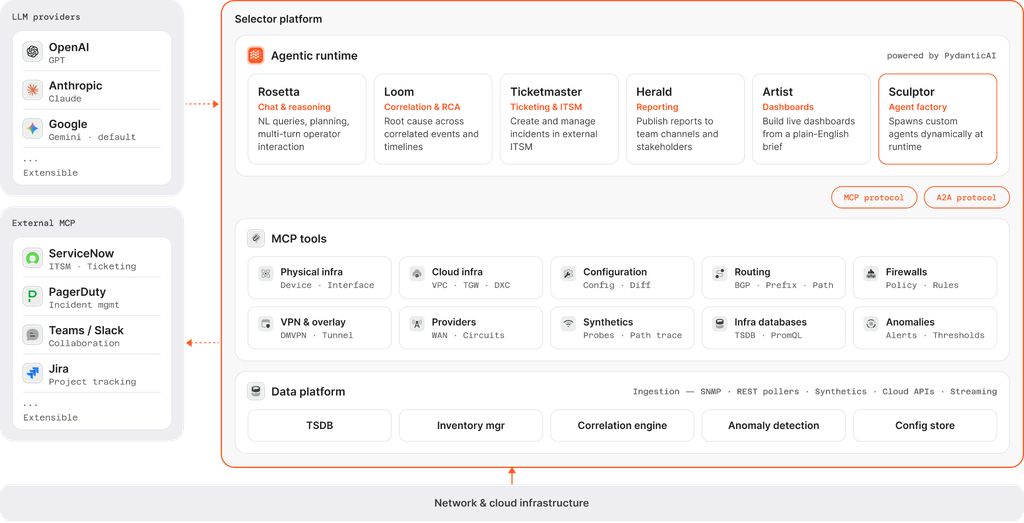
Two ways the work starts
- Operator-led: an engineer asks Rosetta a question in plain language, and Rosetta brings in the right specialists.
- Event-led: an incident, a schedule, an API call, or another agent triggers the investigation, so the work is underway before anyone is paged. Rosetta becomes the window into that work when an engineer steps in.
Meet the agents
Each agent has one field of expertise and a scoped set of tools. That narrow focus makes their answers reliable and easy to audit. You never need to know which agent is doing the work. You ask Rosetta, and Rosetta decides.
Rosetta: interface and orchestration
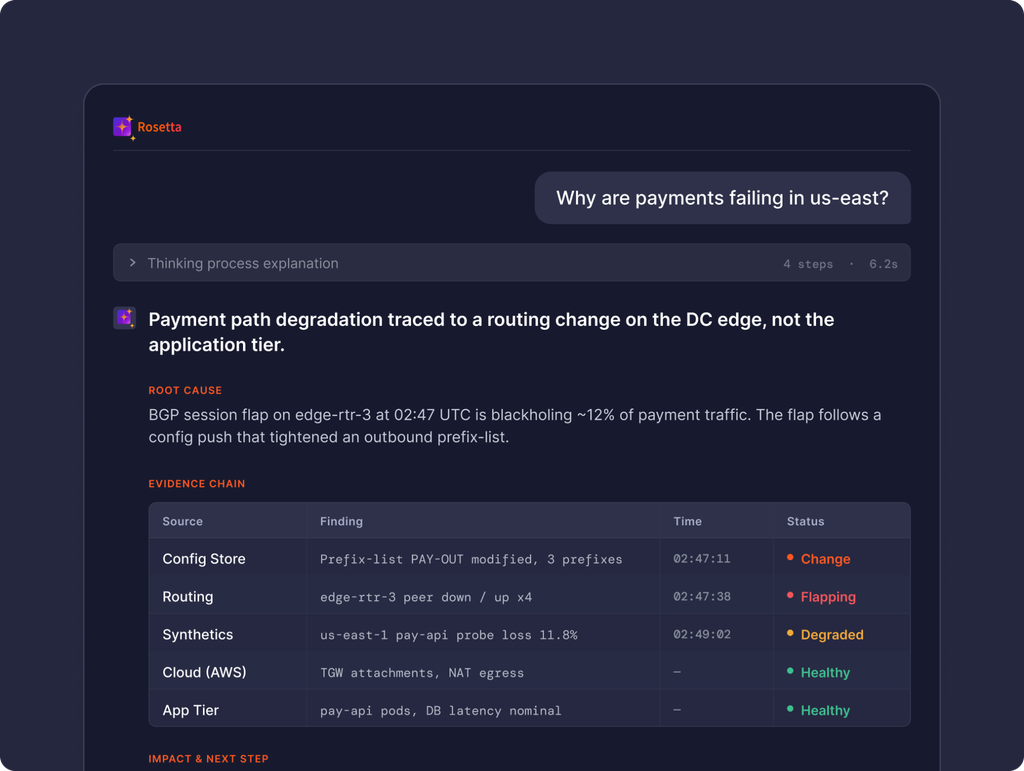
Rosetta is the front door to Foundry. It reads your question, calls the specialists it needs in parallel, and returns one answer with the supporting evidence attached. There is no query syntax to learn and no dashboard to navigate. Rosetta holds context across follow-up questions, and you can inspect its reasoning, see which agents it called, and open the evidence behind each claim.
Loom: correlation and root cause
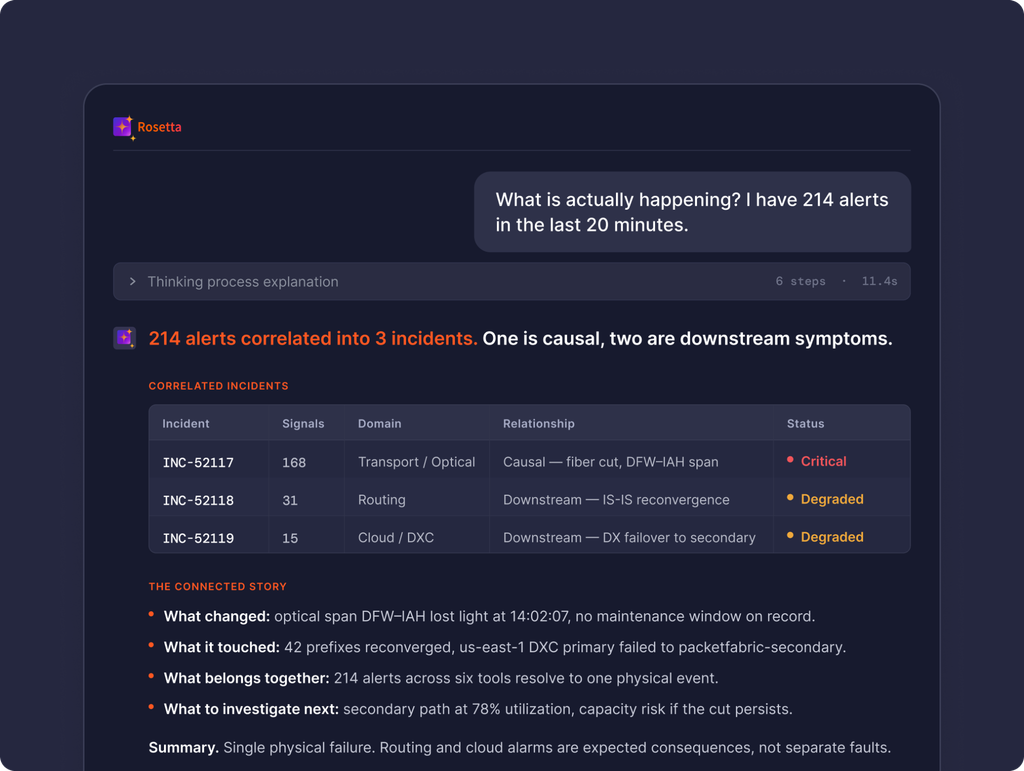
Loom collapses alert storms across domains into real incidents. It separates the causal fault from downstream symptoms, reconstructs the timeline and blast radius, and builds the evidence trail. Loom also flags emerging risks before they escalate, and its findings become the starting context for every other agent.
TicketMaster: ticketing and ITSM
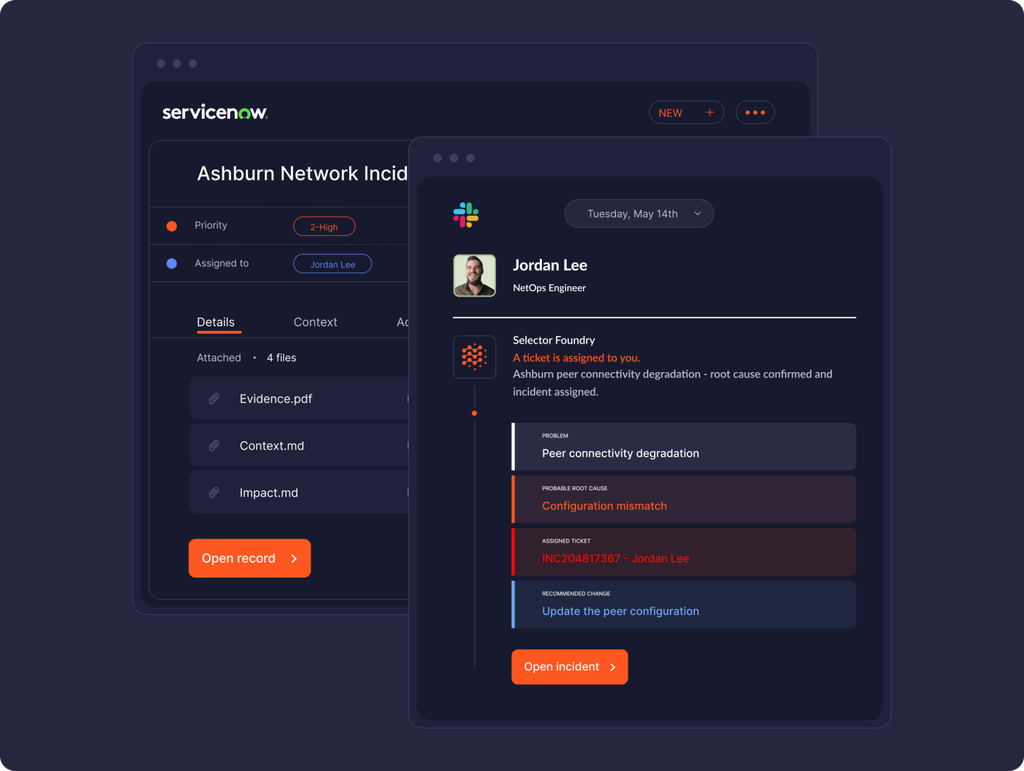
TicketMaster opens incidents in ServiceNow, Jira, or your ITSM of choice with the root cause already included. It assigns the right owner, attaches evidence, context, and impact, and notifies the team in Slack, Teams, or other channels. As the investigation moves, TicketMaster keeps the ticket current in both directions.
Herald: notifications and reporting
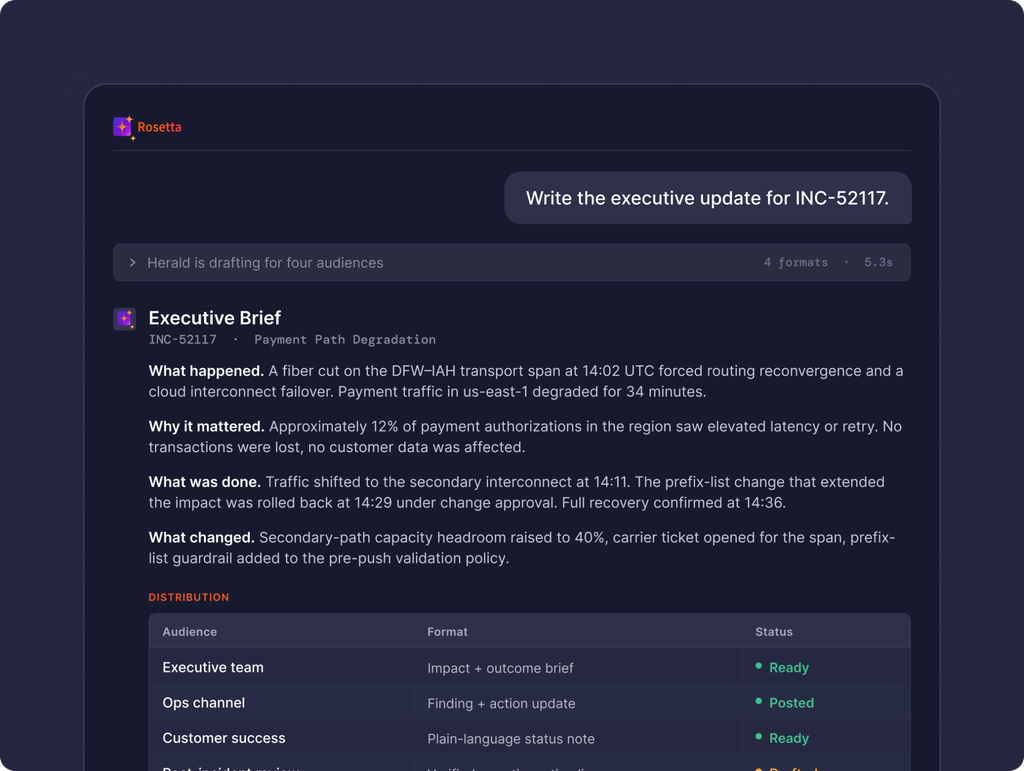
Herald shapes findings for each audience: an executive brief, an ops note, or a customer status update. It publishes to the channels your teams already use, including Slack, Teams, and email. Herald also schedules recurring briefings and writes post-incident reviews from the verified record.
Artist: dashboards on demand
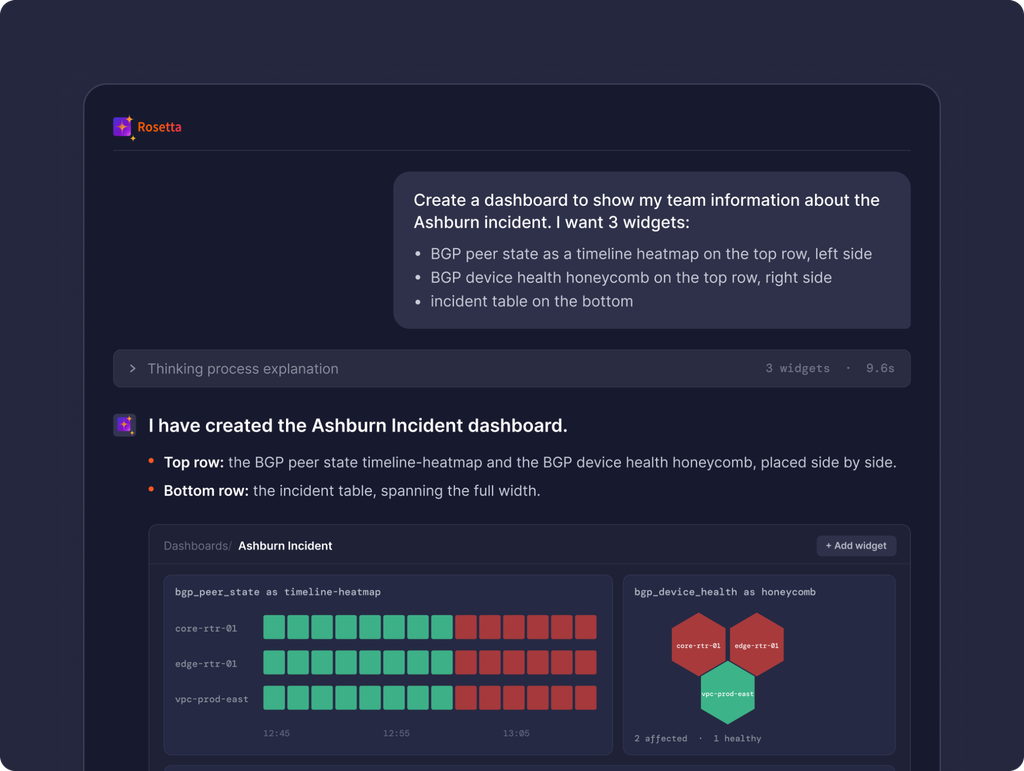
Artist builds live dashboards from a plain-language request in seconds. It chooses the right visualization for each metric, whether a heatmap, honeycomb, table, or graph, and arranges the layout. You can refine any widget in the conversation, changing the time window, chart type, or layout without filing a request with the tooling team.
Want to see Artist work in real time? Try out the interactive demo here.
Sculptor: the agent builder
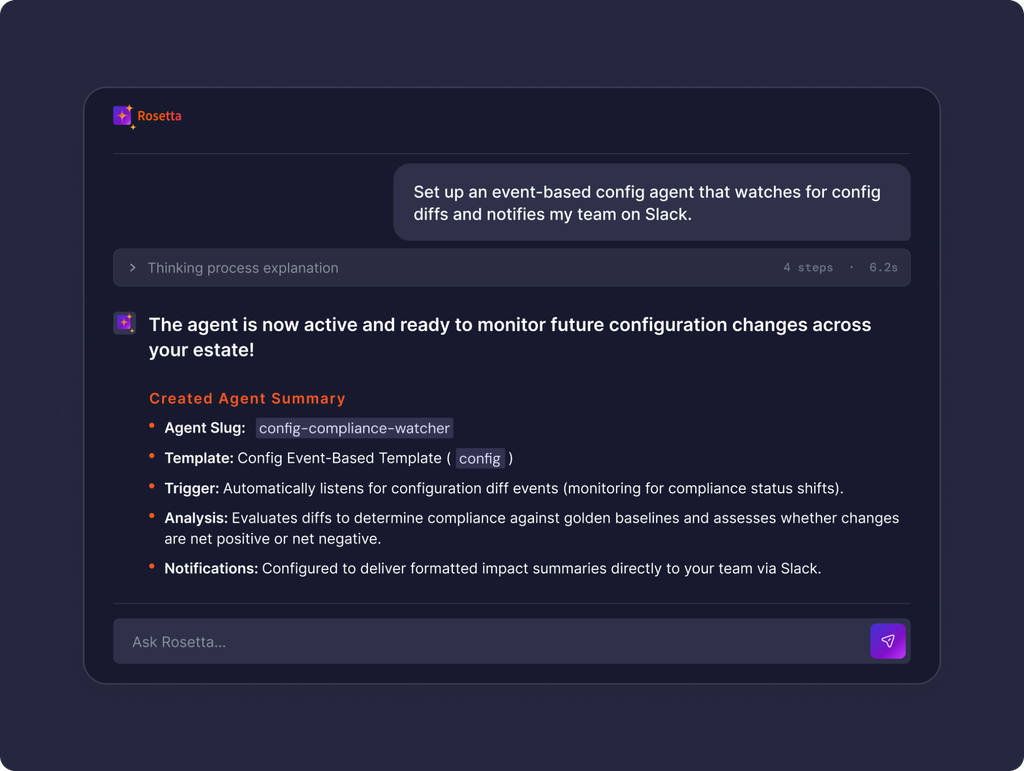
Sculptor turns your team’s playbooks into governed agents. Describe the agent you want in plain language, and Sculptor picks the tools, sets it up, and builds it. Sculptor-built agents trigger on events, schedules, or API calls, and every run, task, and log is visible to your team.
Build, test, and govern your own agents
Every network is different. Topology, vendor mix, naming conventions, escalation paths, and operating norms vary from team to team, and that knowledge lives in your runbooks and with your senior engineers. Foundry makes those engineers the authors of the agents that run on their network.
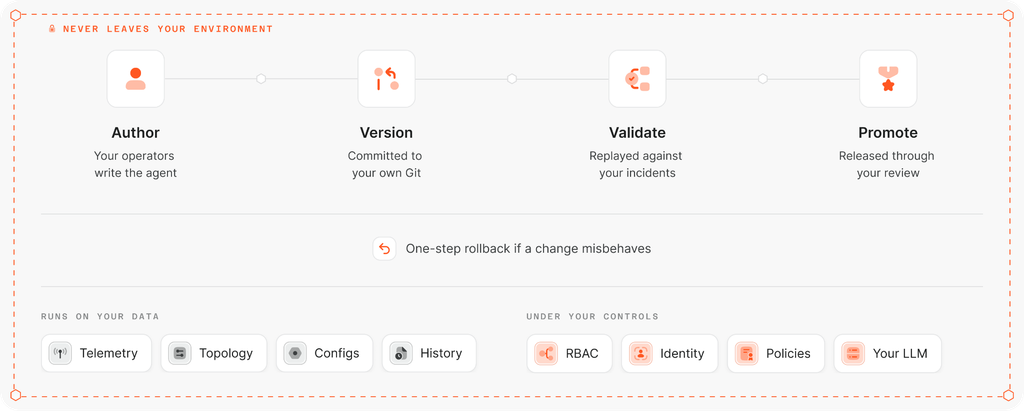
Foundry treats agents the way your team already treats software:
- Authored and versioned: agents are committed to your own Git repository and reviewed through your existing pull-request workflow.
- Tested against your history: before promotion, an agent is replayed against your historical incidents, with a pass or fail result for each one. A failed promotion rolls back in one step.
- Run on your data: agents execute where your telemetry already lives, so no operational data is copied to an outside agent service.
- Governed by your controls: agents run on the LLM you choose, under your existing RBAC and identity policies, with tool-level scoping. A human approves every change, within limits your administrators define.
What changes for your team
When the investigation starts before anyone is paged, the root cause is already identified by the time the bridge call would have assembled. Selector customers have seen mean time to resolution improve by 8x, war rooms shrink to a handful of engineers, and roughly 1,000 engineer-hours reclaimed per major incident.
Selector is recognized as a Representative Vendor in the 2026 Gartner® Market Guide for Agentic NetOps Software. Foundry is how we deliver on that category: specialized agents, working from one correlated model of your network, acting only within the limits you set.
Download your copy of the market guide here.
Stay Connected
Selector is helping organizations move beyond legacy complexity toward clarity, intelligence, and control. Stay ahead of what’s next in observability and AI for network operations:
- Subscribe to our newsletter for the latest insights, product updates, and industry perspectives.
- Follow us on YouTube for demos, expert discussions, and event recaps.
- Connect with us on LinkedIn for thought leadership and community updates.
- Join the conversation on X for real-time commentary and product news.


