Webinar: The New Era of Agentic NetOps
Introducing Selector Foundry — Sept. 22
Webinar: The New Era of Agentic NetOps
Introducing Selector Foundry — Sept. 22
Selector Foundry is the Agentic NetOps platform on Selector’s full-stack observability and AIOps foundation. Its agents correlate the evidence, find the root cause, act inside your guardrails, and prove recovery, all on a single correlated model of your whole path.
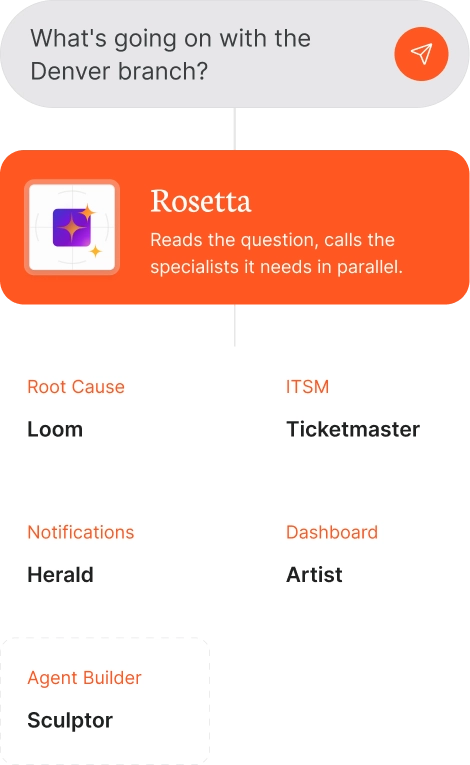
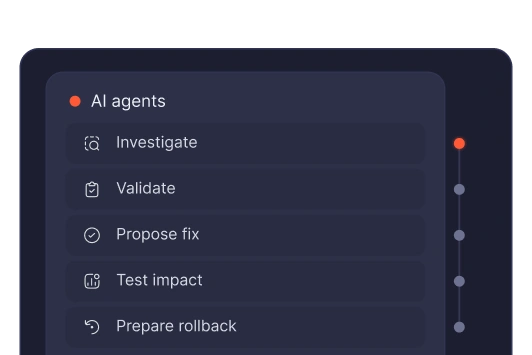
Selector Foundry puts a team of specialized agents on the context the Selector platform already builds. Each one owns a single field of expertise and a defined set of tools. You ask Rosetta in plain language, and it works out which specialists answer.
What's going on with the Denver branch?

Reads the question, calls the specialists it needs in parallel, and returns one answer with the evidence attached.
Weaves the signals into the root cause that started it, with a trail you can follow.
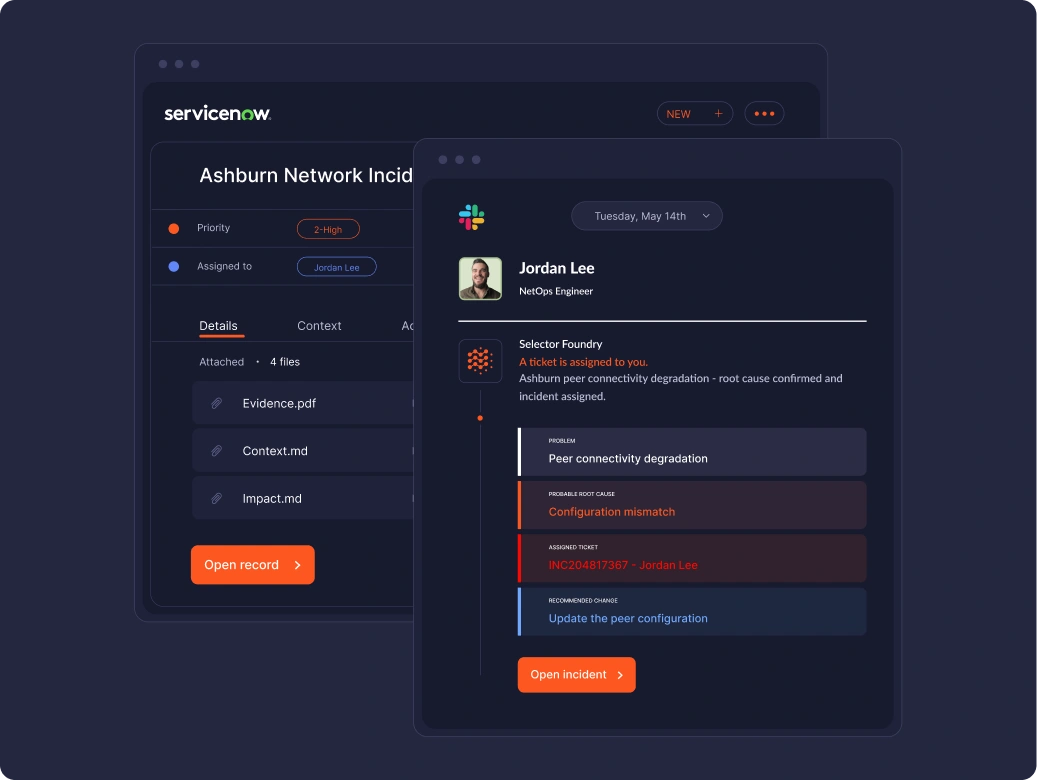
Opens and updates the ticket in ServiceNow or Jira, without any manual work.
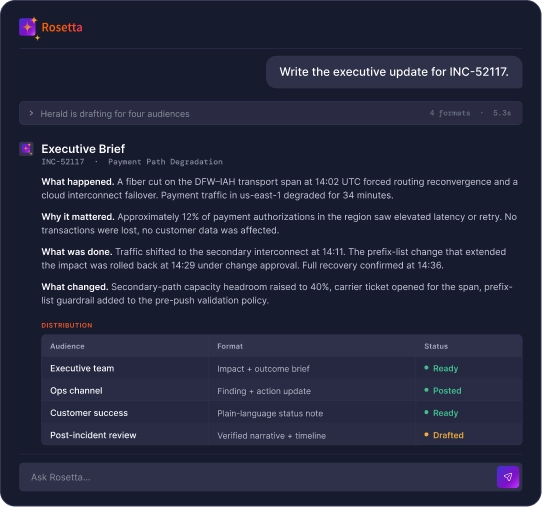
Sends the right update to the right channel, the moment it matters.
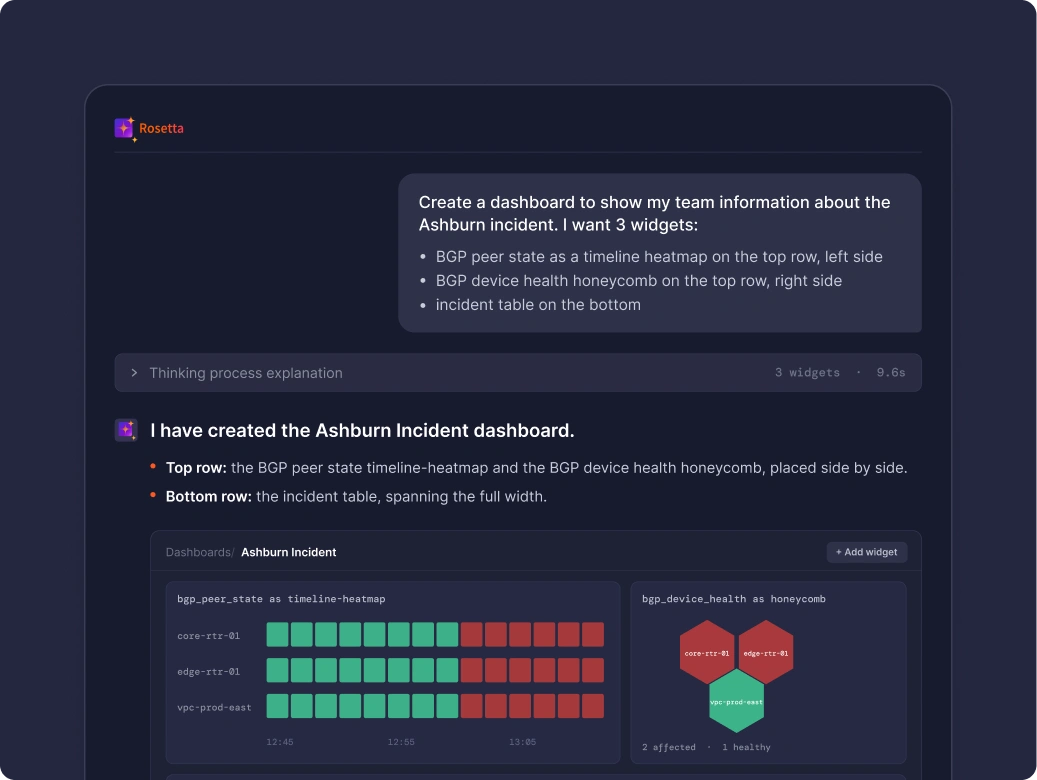
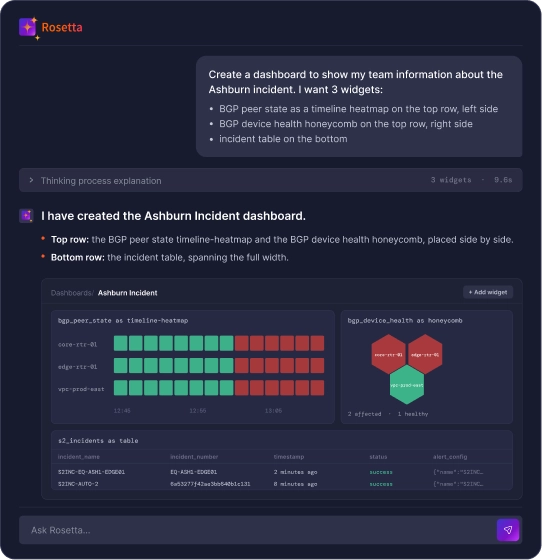
Builds the exact view the question needs, so no one hunts across dashboards.
Builds new specialists for your custom workflows, inside your guardrails.
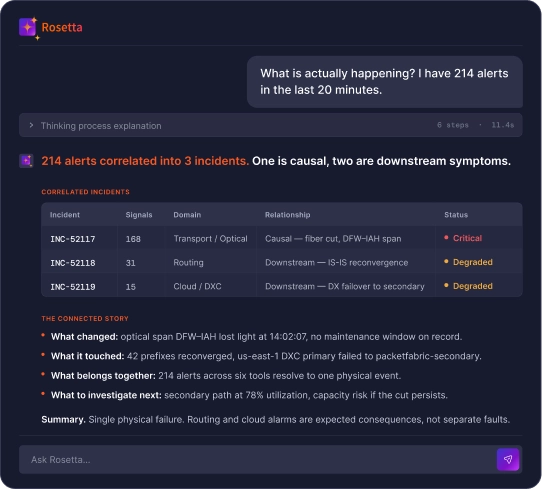
Ask in plain language. Rosetta is your single interface to the platform, and the orchestrator that calls the right agents and returns one answer.
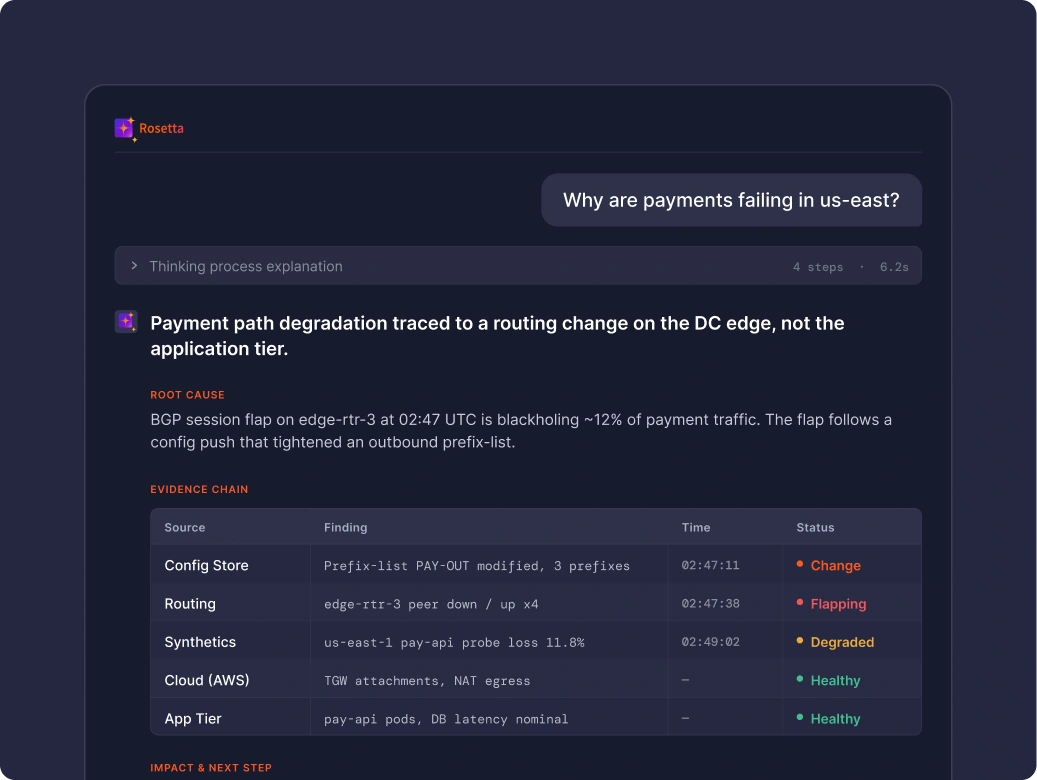
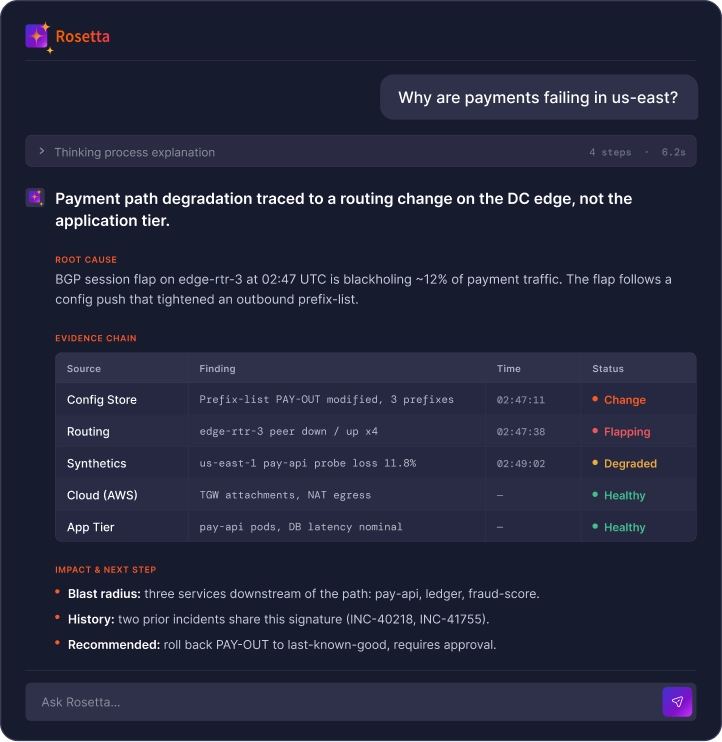
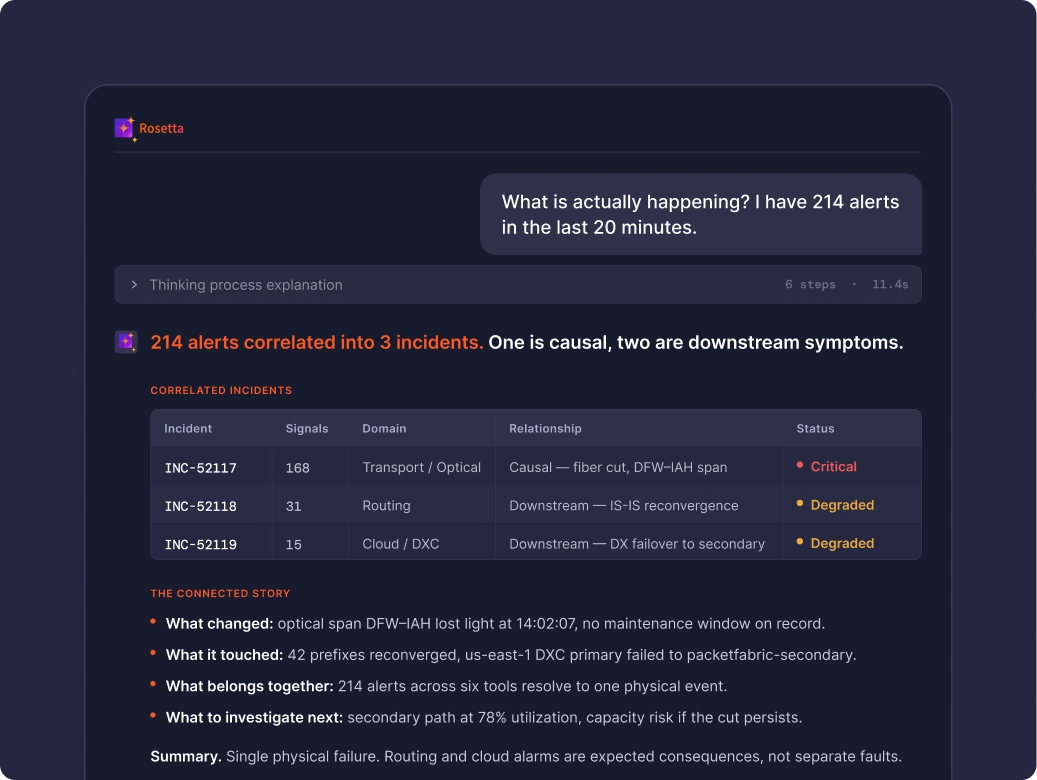
Loom weaves a flood of alerts across every domain into a few correlated incidents, telling source from symptom and naming the root cause.
TicketMaster files the incident in your own ITSM with the root cause and evidence attached, routes it to the right owner, and keeps it current as things change.
Herald turns a finding into the right update for every audience and delivers it to the channels your team already uses, on demand or on a schedule.
Artist turns a plain-language request into a live dashboard, choosing the right widgets and laying them out the way you asked, in seconds.
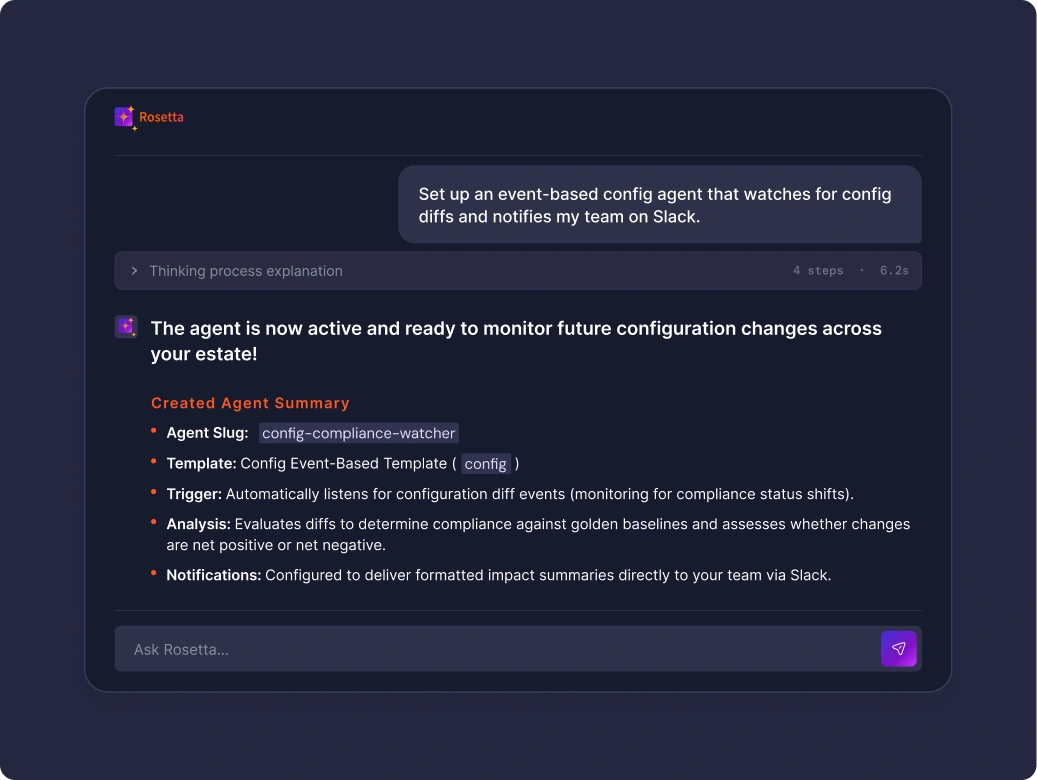
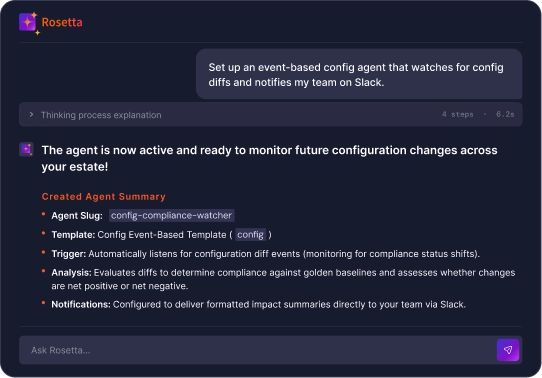
Sculptor turns your playbooks into agents. Describe what you want in plain language, and it builds, triggers, and runs a governed agent in the background.
Foundry compresses the incident lifecycle, from fragmented signals to an evidence-backed resolution, so your best engineers spend their time on the network instead of the bridge call.
Root cause is named before the bridge call assembles. MTTR drops from four hours to thirty minutes, an 8x improvement.
One team resolves the incident instead of every domain proving it is innocent. War rooms shrink from 250 engineers to 5.
Engineers stop hand-carrying triage between tools. Roughly 1,000 engineer-hours are reclaimed per major incident.
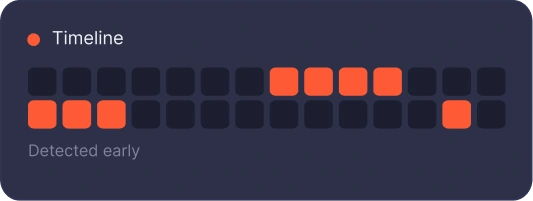
The investigation starts before anyone is paged, so incidents are caught rather than chased.
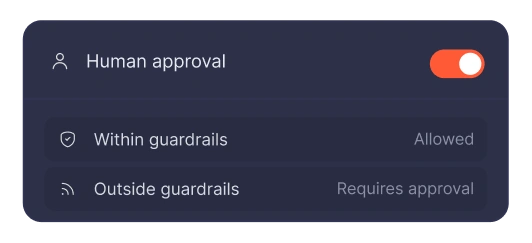
Remediation your team can trust. A human approves every change, inside the limits you set.
No rip and replace. Add a domain or a vendor without re-architecting anything.
Root cause is named before the bridge call assembles. MTTR drops from four hours to thirty minutes, an 8x improvement.
One team resolves the incident instead of every domain proving it is innocent. War rooms shrink from 250 engineers to 5.
Engineers stop hand-carrying triage between tools. Roughly 1,000 engineer-hours are reclaimed per major incident.
The investigation starts before anyone is paged, so incidents are caught rather than chased.
Remediation your team can trust. A human approves every change, inside the limits you set.
No rip and replace. Add a domain or a vendor without re-architecting anything.
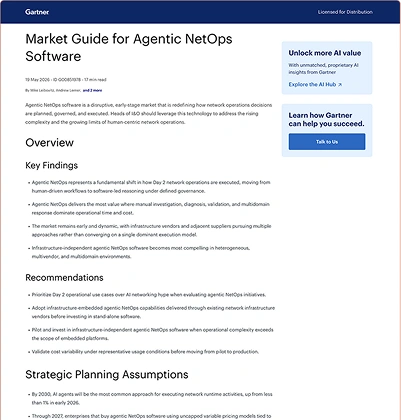
Read Gartners latest resport on Agentic NetOps Software to understand how the market is evolving, which capabilities matter most, and why Selector is recognized as a representative vendor in this emerging market.
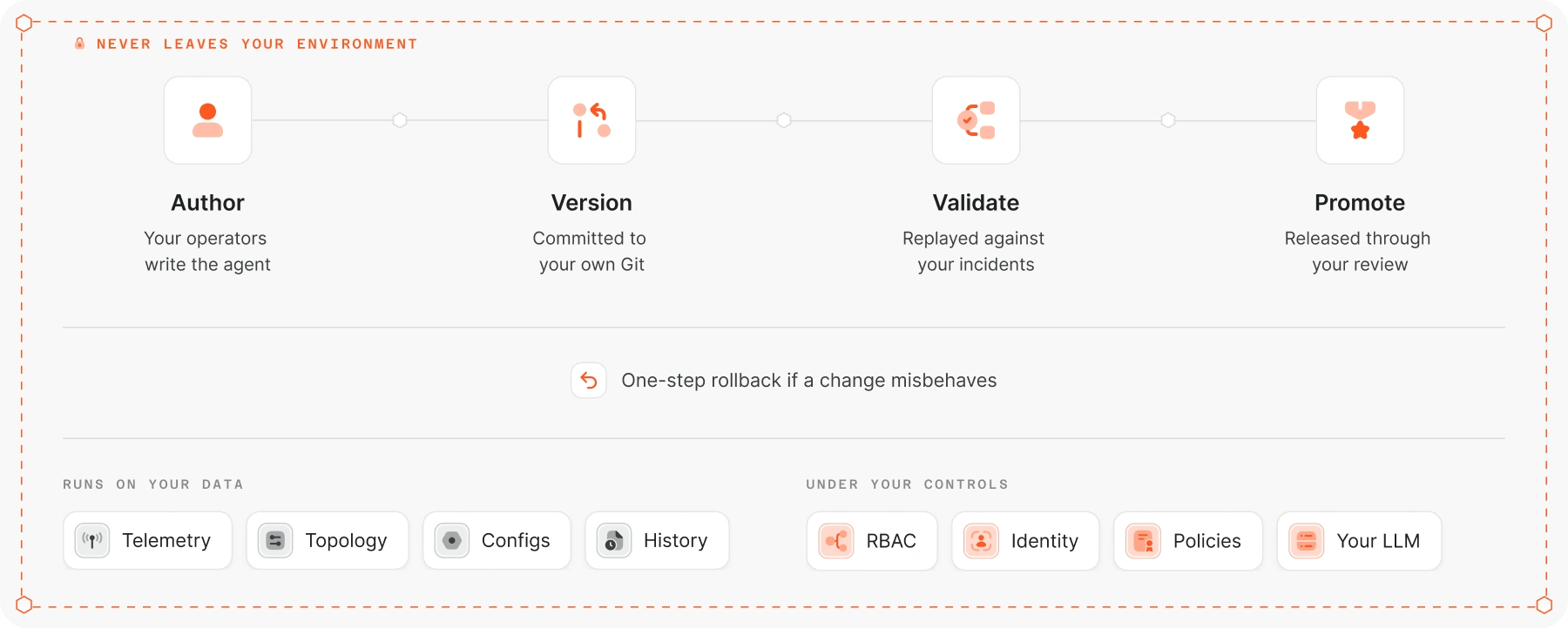
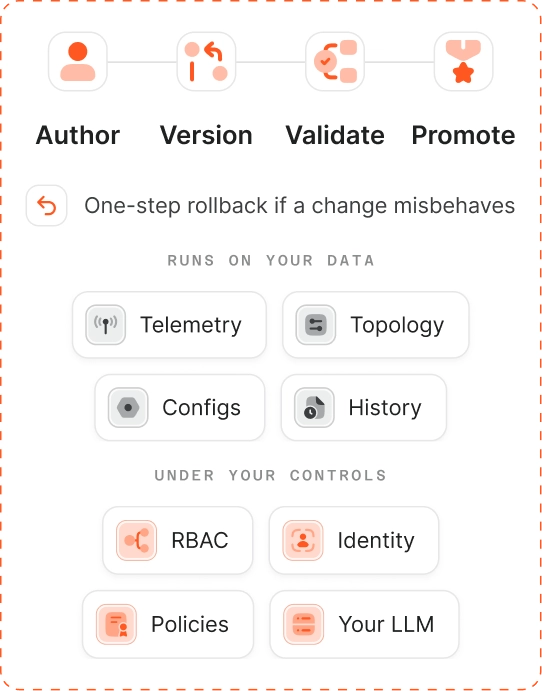
Foundry agents run where your telemetry already lives. You author them as software, version them in your own Git, and run them under the controls you already enforce, so nothing is copied to an outside service.
Agents execute where your telemetry lives. Nothing leaves.
Written by your team, committed to your Git, reviewed via pull requests.
Replayed against past incidents, with one-step rollback.
Run on your LLM of choice, under your RBAC and identity policies.
Absolutely fantastic company. Their approach to intelligent network monitoring and analytics is unique and refreshing. I can’t recommend them highly enough. I honestly get excited by weekly catch-up calls because of the possibilities.
Principal Engineer, Comcast
Before Selector, we lacked the end-to-end visibility needed to see what was happening across our applications, infrastructure, and network. Now we have a consolidated view of all critical data sources allowing us to proactively detect and resolve issues faster to keep our services running and our customers happy.
VP of IT Operations, TracFone
Our goal is to keep service up – always. With Selector, we are constantly monitoring availability and performance. If an abnormal condition arises, we take immediate action.
Senior Manager of Infrastructure & Software Cloud Delivery, Bell
Selector is a next-generation tool which provides comprehensive visibility and automation capabilities to integrate with other platforms and products. This reduces the burden on our operations team, allowing us to improve incident and change management processes as well as detection and identification of network issues.
Digital Infrastructure Company
Selector has significantly enhanced the operations team workflow by improving alert visibility, correlating alerts, and assigning value to them. Also, the implementation of auto-incidents has been pivotal in reducing missed incidents and helping prioritize those that occur most frequently, enabling us to achieve faster response times.
Digital Infrastructure Company
Selector has provided our operations team with valuable insights and analytics. By analyzing vast amounts of data, Selector can identify patterns, anomalies, and trends, enabling operators to make data-driven decisions and optimize their activities. This has led to improved resource allocation, better capacity planning, and enhanced overall performance.
Digital Infrastructure Company
Selector has played a crucial role in automating and streamlining our operations. By leveraging advanced learning algorithms, Selector can proactively detect and resolve incidents, reducing downtime and minimizing the impact on operations. This has resulted in improved system availability and increased productivity.
Digital Infrastructure Company
Selector has revolutionized our operations and greatly enhanced the efficiency of our team. With the implementation of Selector, operators have experienced significant improvements across network monitoring and incident management.
Digital Infrastructure Company
As a next-generation observability tool, Selector AI is designed to work seamlessly across environments and industries, showcasing the transformative power of AI to elevate network resilience, minimize failures, and mitigate human error.
Digital Infrastructure Company
Selector provides proactive isolation event detection within the routing domain by correlating a range of packet loss metrics, automatically alerting the on-call engineer with precise location data and actionable insights to expedite troubleshooting. This intelligent approach has significantly reduced Mean Time to Repair (MTTR), enabling engineers to zero in on critical metrics that directly enhance customer experience.
Digital Infrastructure Company
Manual monitoring relies on engineers spotting alerts before raising incidents. If an engineer fails to notice an alert, there is a high chance the incident will be missed, along with the opportunity to troubleshoot and restore it promptly. Selector correlation ensures that no incidents are missed.
Digital Infrastructure Company
Selector has been a significant advancement in our network monitoring, marking a major milestone in automation. Prior to Selector, the incident KPI target was a challenge for our operations team. However, with Selector’s correlation capabilities, the time taken to address incidents has been significantly reduced compared to manual processes.
Digital Infrastructure Company
Every network engineer carries an instinct that outsiders mistake for caution: a change in one place can travel. Reroute a path, push a policy, drop an interface, and the effect